There’s something deeply comforting about walking into a warm home on a cold evening. Not the dry, stuffy kind of heat that makes you crack a window in January, but that balanced, steady warmth that feels almost invisible. The kind you don’t think about—because it just works.
And yet, behind that quiet comfort is a small orchestra of parts doing their job: burners, coils, ducts, controls, and yes, the often-overlooked design decisions that determine whether your system runs smoothly or costs you more than it should. If you’ve ever wondered why some houses feel evenly heated while others have cold corners and overheated bedrooms, you’re not alone. Heating isn’t just about turning the temperature up. It’s about how everything works together.
It Starts With the System Itself
Most people don’t think about their home heating systems until something goes wrong. A strange noise. A spike in the energy bill. Or that one room that never seems to get warm no matter how high you set the thermostat.
At their core, heating systems are simple: generate heat, distribute it, maintain the set temperature. But in reality, there are layers of complexity. Furnaces, boilers, heat pumps—each operates differently. A forced-air furnace pushes heated air through ducts. A boiler circulates hot water through radiators or underfloor piping. Heat pumps move heat rather than create it, which makes them surprisingly efficient in moderate climates.
Choosing the right system depends on more than just budget. Climate, insulation quality, square footage, and even ceiling height all matter. An oversized unit can cycle on and off too frequently, wearing itself out. An undersized one will struggle constantly, never quite catching up. It’s a bit like wearing the wrong size shoes—you can manage, but you’ll feel it.
Airflow: The Hidden Backbone of Comfort
You can have the best furnace in the world, but if the air can’t move properly, comfort goes out the window. Ductwork is often installed and forgotten, tucked behind drywall and above ceilings. But leaks, poor insulation, and bad design can cause major efficiency losses.
This is where thoughtful venting installation makes all the difference. Proper venting ensures that combustion gases exit safely and that air circulation remains balanced. Poorly installed vents can lead to uneven heating, reduced efficiency, and even safety concerns in gas-powered systems.
And it’s not just about safety. Balanced airflow prevents hot and cold spots. If one branch of ductwork is too restrictive, air will naturally flow elsewhere. Over time, that imbalance strains the system. Regular inspection and occasional adjustments can improve performance more than many homeowners expect.
Sometimes, the fix isn’t dramatic. Sealing joints. Cleaning ducts. Adjusting dampers. Small changes. Big difference.
Smart Control Is More Than Just a Fancy Thermostat
We live in an era where you can adjust your lights from a café and check your doorbell from an airplane. Heating has joined that world, and it’s not just about convenience. Done right, it’s about precision.
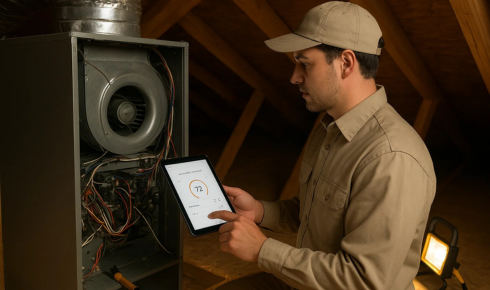
Modern systems increasingly rely on thermostat integration that goes beyond basic temperature settings. Smart thermostats learn usage patterns, adjust based on occupancy, and even account for weather forecasts. Some can detect when you leave home and automatically shift to an energy-saving mode.
But here’s the thing: the thermostat is only as smart as the system behind it. If your furnace is outdated or your ducts leak air, even the most advanced controls can’t compensate fully. Integration works best when it’s part of a holistic approach—upgraded equipment, sealed ducts, proper insulation.
When everything aligns, though, the results can be impressive. Lower energy bills. More consistent temperatures. Fewer arguments about “who touched the thermostat.”
Efficiency Isn’t Just About the Equipment
There’s a common assumption that installing a high-efficiency furnace solves everything. And yes, efficiency ratings matter. But they’re only part of the story.
Insulation quality plays a massive role. So does air sealing around windows and doors. Even furniture placement can affect airflow. A couch pushed against a vent blocks circulation, forcing the system to work harder. It’s small, almost silly details like that which quietly chip away at performance.
Routine maintenance might be the most underrated factor of all. Changing filters regularly, checking burners, inspecting heat exchangers—these tasks keep systems running smoothly. Skipping maintenance doesn’t cause immediate failure. It causes gradual inefficiency. And gradual inefficiency is expensive.
If you’ve ever noticed your heating bill creeping up year after year, even without obvious problems, deferred maintenance is often the culprit.
When to Upgrade (And When Not To)
Heating systems don’t last forever. Most furnaces operate reliably for 15–20 years if maintained well. Boilers can last longer. Heat pumps vary depending on usage and climate.
But replacement isn’t always urgent. Sometimes repairs make sense. Other times, investing in a new system reduces energy costs enough to justify the upfront expense. The decision usually comes down to age, repair frequency, and overall efficiency.
There’s also comfort to consider. If certain rooms are always cold, if the system runs constantly, or if humidity levels feel off, it may be time to evaluate more than just parts. Sometimes, it’s about redesigning airflow entirely.
The good news? Heating technology has improved significantly over the last decade. Quieter operation. Variable-speed motors. Zoned heating options. These upgrades don’t just save money—they make living spaces feel better.
The Human Side of Warmth
At the end of the day, heating isn’t about equipment specs or efficiency percentages. It’s about comfort. It’s about sitting with a cup of tea while the wind rattles outside and not thinking about the temperature at all.
A well-designed heating system is almost invisible. It doesn’t blast hot air unpredictably. It doesn’t leave you piling on sweaters in one room and opening windows in another. It just… works.
There’s something satisfying about understanding how your home stays warm. Not in a technical, engineer-heavy way, but in a practical sense. Knowing what influences performance. Recognizing small warning signs. Making informed decisions when upgrades become necessary.
Because comfort, real comfort, is rarely accidental. It’s the result of thoughtful planning, proper installation, regular care, and smart control. And when all those pieces come together, your heating system fades into the background—right where it belongs.