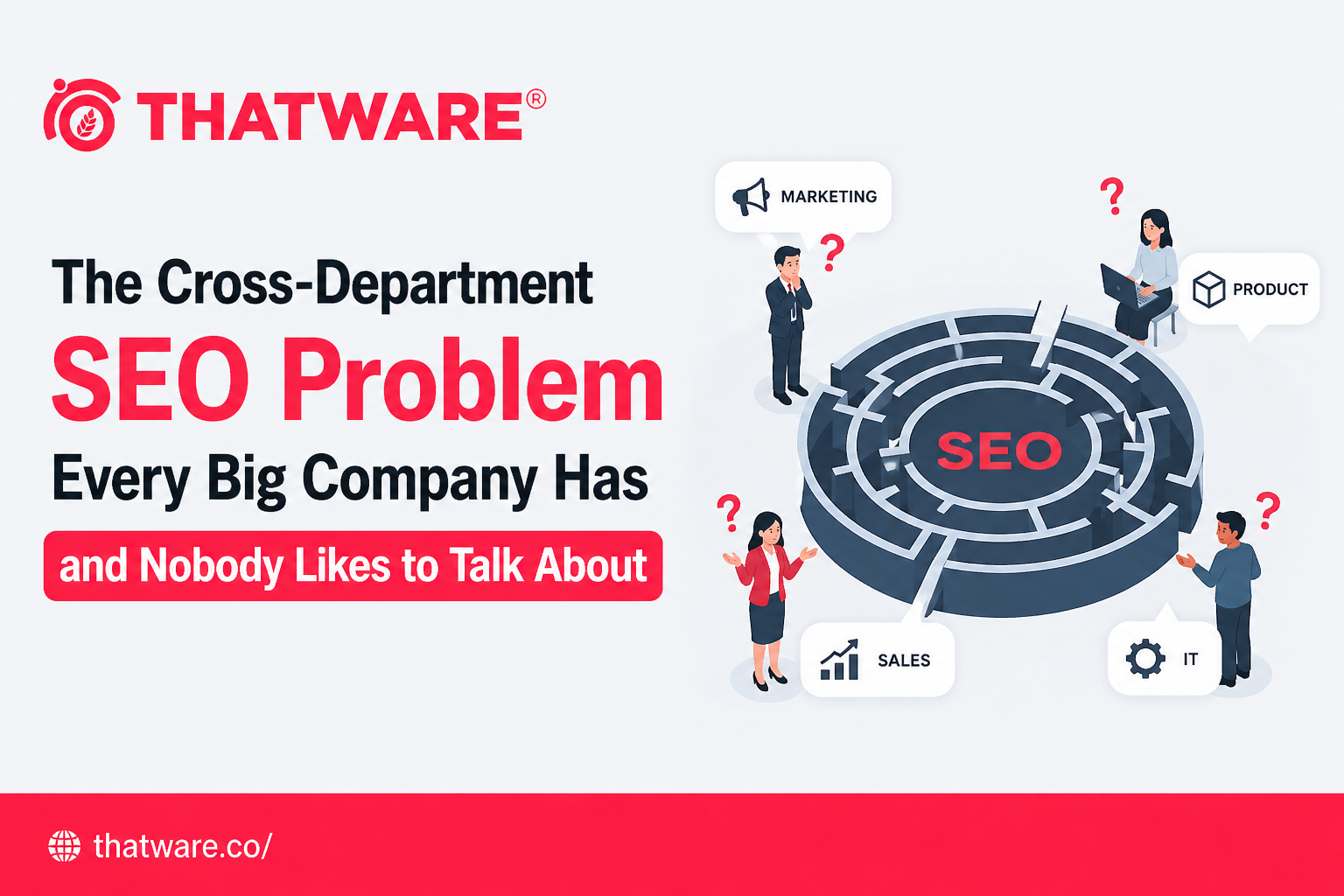
There’s a scene that plays out in large organizations with enough regularity to be almost archetypal. An SEO team — internal, agency, or some combination — identifies a critical technical issue. Maybe it’s a crawlability problem that’s keeping important pages out of the index. Maybe it’s a JavaScript rendering issue that’s preventing structured data from being read. Maybe it’s a site speed regression caused by a recent platform update. The issue is documented, prioritized, explained to stakeholders with appropriate urgency.
And then it sits in an engineering sprint queue for four months.
During those four months, the SEO team writes updates. The account manager makes polite escalation requests. The issue continues to suppress rankings. The stakeholder who needs to sign off on prioritizing the fix has seventeen other things they consider more urgent. Everyone is doing their jobs. The problem doesn’t get fixed.
This isn’t an SEO failure. It’s an organizational failure. And in large companies, organizational failures are responsible for more SEO underperformance than technical or strategic failures. Which makes them worth understanding — and navigating — as explicitly as you’d navigate any other SEO challenge.
Why Cross-Departmental SEO Coordination Is Genuinely Hard
SEO touches almost every part of a large organization. Engineering controls the technical foundation — site architecture, platform capabilities, page speed infrastructure, rendering pipeline. Content teams or business units own the pages that need to be optimized. Legal and compliance review content before publication. Brand teams control style and tone guidelines. IT manages the hosting infrastructure, CDN, and security configuration that affects performance. E-commerce or product teams control the user experience and conversion flows that affect behavioral signals.
Each of these teams has their own priorities, their own backlog, their own definition of urgency, and their own reporting line. SEO’s priorities don’t automatically take precedence over any of them. And in most large organizations, SEO doesn’t own the organizational authority to make them — it can only request, recommend, and persuade.
This creates a coordination tax that compounds over time. The more departments need to align for an SEO initiative to succeed, the slower it moves. The more competing priorities each department is managing, the longer SEO work waits in queue. Large enterprises routinely have excellent SEO strategies that deliver mediocre results because the organizational mechanics of implementation are broken.
The Stakeholder Map That Doesn’t Exist
Most large companies don’t have a clear map of which SEO decisions sit with which teams, what the approval processes are, and who the actual decision-makers are for different categories of work.
This sounds like a minor operational detail. It isn’t. Without this map, every SEO recommendation requires a fresh round of figuring out who needs to be involved, who has authority, and what process it needs to go through. The time spent on this friction — often weeks, sometimes months — represents the largest hidden cost in enterprise SEO engagements.
Seo for enterprises done well starts with building this map explicitly. Which team owns technical implementation — and specifically which engineers handle SEO-related work? Who approves content changes on high-traffic pages? Who in legal reviews copy for compliance before publication? What’s the standard timeline for each type of change? What are the escalation paths when standard processes are moving too slowly?
This mapping exercise, done at the beginning of an engagement, saves enormous time and frustration over the course of a year. It converts vague “we need to align stakeholders” language into specific process documentation that actually guides execution.
Building Internal Advocacy Without Becoming Political
The SEO function in a large organization needs internal advocates — people in different departments who understand why SEO matters for their specific goals and will champion SEO priorities within their own teams.
Building these relationships is legitimate political work, and pretending otherwise doesn’t help. An engineering lead who understands how Core Web Vitals improvements affect organic traffic will prioritize page speed work differently than one who sees it as marketing team overhead. A content director who’s seen data connecting content quality to organic conversion rates will make different editorial investment decisions than one who’s never seen that connection demonstrated.
The SEO team’s job isn’t just to identify opportunities and make recommendations. It’s to help the internal organization understand why those opportunities matter for goals they already care about — and to do that work department by department, in the language each department speaks.
An engineering team responds to technical documentation and performance data. A content team responds to examples and competitive benchmarking. A legal team responds to risk framing. A C-suite responds to revenue impact models. The same SEO recommendation, framed differently for different audiences, gets different organizational traction.
The Measurement Problem in Complex Organizations
Enterprise SEO measurement is complicated by organizational structure in ways that smaller companies don’t face. Revenue attribution across organic, paid, direct, and assisted channels is genuinely murky at scale. Different teams often use different analytics implementations, creating data discrepancies that undermine confidence in any single reporting view. SEO work done by one team (link building, content) produces results that show up in another team’s metrics (organic traffic, pipeline), creating attribution disputes that slow down investment decisions.
Enterprise seo services that work well for large organizations include investment in measurement infrastructure that spans these organizational boundaries. Unified tagging standards. Attribution models that all major stakeholders agree on. Reporting frameworks that translate SEO metrics into the business terms each stakeholder audience cares about.
This infrastructure work isn’t glamorous and doesn’t show up directly in ranking improvements. It’s the foundation for organizational alignment — and without it, every reporting conversation becomes a debate about whose numbers are right rather than a discussion about what to do next.
What Better Cross-Department Coordination Actually Looks Like
Organizations that have cracked this tend to share specific structural features. A clear SEO steering committee or working group that meets regularly and includes representation from engineering, content, legal, and marketing — not a presentation of SEO results to stakeholders, but a working session where priorities are negotiated and commitments are made.
Dedicated engineering capacity for SEO work — even a portion of one engineer’s sprint capacity, consistently allocated, produces dramatically faster technical implementation than competing for ad-hoc attention from engineers with full backlogs.
Documented escalation processes for time-sensitive SEO issues — knowing in advance who to call and what the fast-track path looks like when a critical issue can’t wait for the standard queue.
Regular SEO impact reporting in business terms that non-SEO stakeholders understand — connecting organic performance directly to revenue outcomes keeps SEO on the agenda in senior conversations and makes internal resource requests easier to justify.
None of this is rocket science. All of it requires sustained effort to establish and maintain. The organizations that treat cross-departmental coordination as part of the SEO function — rather than as something that should just happen naturally — get dramatically better results from the same technical and content investments.