Good Water Starts With Understanding Your Home’s Needs
Water is one of those things you barely notice when everything is working properly. Turn on the faucet, fill a glass, take a shower, wash the dishes — done. But once you start seeing white spots on your glasses, scale around the faucets, strange tastes, or an unpleasant smell, water quality suddenly becomes a daily conversation.
The thing is, not every water problem has the same cause. Some homes struggle with hardness, others with sediment, chlorine taste, iron, sulfur, or a combination of several issues. That’s why choosing treatment equipment based only on what worked for your neighbor isn’t always the smartest move.
A better approach is to understand your water first, then choose technology that actually fits the problem.
Start With a Water Test
Before shopping for equipment, testing is one of the most useful things a homeowner can do. A good water test can reveal characteristics that aren’t obvious just by looking at a glass of water.
Testing may identify hardness, pH, iron, manganese, sediment, and other water-quality concerns. For private wells, regular testing is particularly valuable because groundwater conditions can change.
This information gives you a starting point. Instead of guessing which filter you need, you can make a decision based on actual water conditions.
And honestly, that can save money. There’s little point buying an expensive treatment system if it isn’t designed to address the problem you actually have.
When Water Softening Makes Sense
Hard water is one of the most common reasons homeowners consider treatment. Calcium and magnesium dissolved in the water can create scale around fixtures and inside certain water-using appliances.
Over time, homeowners may notice spots on glassware, buildup around showerheads, and soap that doesn’t seem to lather quite as easily.
Water softening systems are designed primarily to reduce hardness minerals. Traditional systems commonly use ion-exchange resin, which captures calcium and magnesium as water passes through the unit.
The resin eventually needs to regenerate, usually with a brine solution. Modern systems can automate this process and, in some cases, adjust regeneration according to household water usage.
Still, proper sizing matters. A softener that’s too small may work harder than necessary, while an oversized system can add unnecessary expense.
Whole-Home Filtration Is About More Than Drinking Water
A small filter attached to the kitchen faucet can be useful when your only concern is taste or drinking water. But what if the same water is being used for showers, laundry, cooking, and appliances?
That’s where whole-home water filtration can make sense.
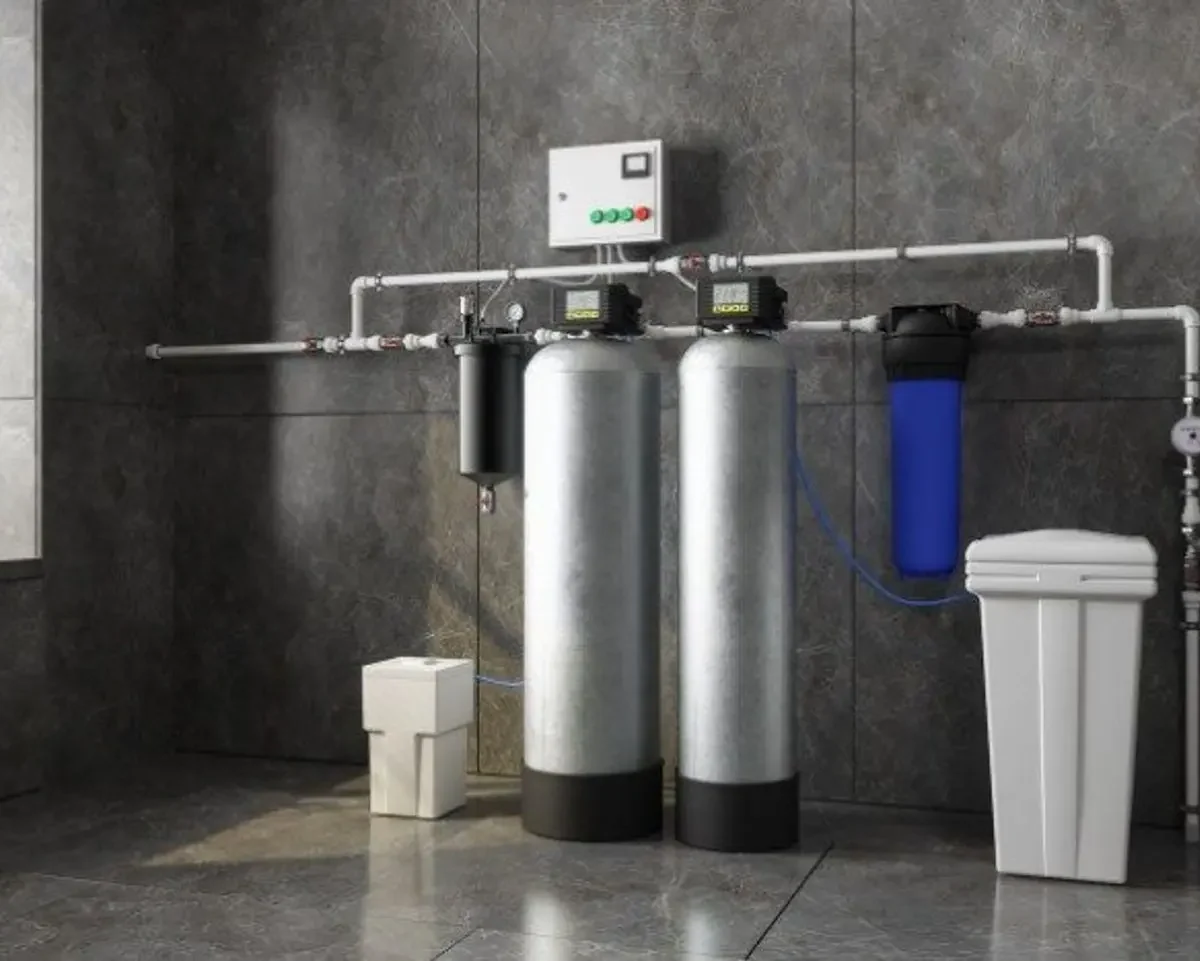
A whole-house system treats water as it enters the property, allowing treated water to travel through the plumbing. Depending on the equipment, filtration may address things such as sediment, chlorine taste and odor, or specific compounds identified during testing.
The key word here is “depending.” No single filter removes everything. The treatment technology should always match the water-quality problem.
Why Drinking Water Deserves Special Attention
Even when household water is generally acceptable, many homeowners want additional treatment for the water they drink and cook with.
That’s where drinking water systems can be useful. Point-of-use filtration can provide an additional treatment step at the kitchen sink, depending on what the system is designed to remove.
Reverse osmosis is one example of a technology used for drinking water treatment. It can reduce a broad range of dissolved substances, although it also produces reject water and may require additional components for proper operation.
Again, testing should guide the decision. A drinking-water system should have a clear purpose rather than simply being purchased because it sounds advanced.
Different Water Problems Need Different Solutions
One of the easiest mistakes to make is assuming that one piece of equipment will solve every water-quality complaint.
A softener is designed for hardness. A sediment filter captures particles. Activated carbon can help reduce certain tastes, odors, and chemicals. Specialized systems may be needed for iron, sulfur, or other concerns.
If several problems exist, a combination approach may be appropriate.
But more equipment isn’t automatically better. Every treatment stage adds cost, maintenance, and complexity. The goal is to use enough treatment to solve the actual problem without turning the home’s plumbing into a maze of unnecessary equipment.
Think About Your Household’s Water Usage
Water treatment equipment needs to keep up with the people using it.
A small household may have very different requirements from a family with several bathrooms and heavy daily water consumption. Peak flow matters, too. If multiple showers, faucets, and appliances operate simultaneously, the system needs to handle that demand without creating a noticeable drop in pressure.
This is why system capacity should be considered alongside water chemistry.
A treatment system can be excellent on paper and still be a poor fit if it isn’t sized for the property.
Installation Matters More Than Many People Realize
Buying the right equipment is only part of the process. Installation also affects performance.
Treatment systems involve plumbing connections, valves, drainage, flow rates, pressure considerations, and configuration. If something isn’t installed correctly, even good equipment may perform poorly.
Professional installation can also reveal existing plumbing problems that might otherwise be overlooked.
For homeowners, this can provide some peace of mind. You aren’t simply placing a box beside the plumbing and hoping for the best.
Maintenance Is Part of the Deal
Every treatment system requires some level of maintenance. Filters eventually need replacement. Softening systems need salt or other servicing. Specialized equipment may require media replacement or periodic professional attention.
Before buying, ask what routine maintenance involves and how much it typically costs.
A system that looks inexpensive initially may not be the best value if replacement filters are costly or service is difficult to arrange.
On the other hand, a properly maintained system can quietly perform its job for years.
Don’t Forget About Your Water Heater
Sometimes homeowners assume every water-quality issue comes directly from the water supply. Not always.
If an unpleasant odor appears primarily in hot water, the water heater may deserve inspection. Plumbing components can also contribute metallic tastes, discoloration, or particles.
That’s why troubleshooting should consider the entire household water system rather than immediately blaming the filtration equipment.
A filter can’t fix a problem that originates somewhere else.
Choosing Water Treatment Without Overcomplicating It
The best water treatment system isn’t necessarily the biggest or most expensive option available. It’s the one that addresses your home’s actual water conditions, fits your daily usage, and can be maintained realistically.
Start with testing. Understand the results. Decide what you want to improve. Then choose technology based on those needs.
Whether your home requires softening, whole-house filtration, drinking-water treatment, or a combination of approaches, good planning makes all the difference.
At the end of the day, water treatment should be fairly unremarkable — and that’s a good thing. You want to turn on the faucet, take a shower, wash a glass, or fill the coffee maker without thinking twice about what’s happening behind the scenes. That’s when you know the system is doing its job.