There’s a specific kind of denial that happens when you notice something wrong with your house and just… decide not to deal with it. For me, that was the crusty white ring around my bathroom faucet. I scrubbed it off maybe once a month for two years, always assuming it was just soap residue or hard water buildup — vague terms I used without actually understanding what either of them meant. Then a plumber came out for an unrelated issue, glanced at my faucet, and casually said, “yeah, that’s mineral scale, your water’s pretty hard.” And just like that, two years of low-key confusion got resolved in about four seconds.
What “Hard Water” Actually Means, In Plain Terms
Turns out that crust wasn’t some mystery substance — it was just hard minerals left behind after water evaporated, building up layer by layer until it became visible enough for even me to notice. Water picks up these minerals naturally as it travels through soil and rock before reaching your home, and depending on where you live, the concentration can range from barely noticeable to genuinely aggravating. My plumber mentioned some regions have water so hard you can practically see the scale forming in real time, which sounds like an exaggeration until you meet someone whose kettle looks like it’s been mined for quartz.
The tricky part is that hardness itself isn’t dangerous. Nobody’s getting sick from it. It’s more of a slow, expensive nuisance — reduced appliance lifespan, clogged pipes, dishes that never quite look clean no matter how much soap you use, because the soap itself struggles to lather properly in hard water to begin with.
The Two Culprits Behind All of It
If you actually dig into what’s causing the hardness, it comes down to two specific minerals almost every time: calcium and magnesium. These are the two main offenders, dissolved into your water supply and mostly harmless to drink, honestly — some people would argue there’s even a minor nutritional upside to trace amounts. But structurally, in terms of what they do to your plumbing and appliances over time, they’re a slow-motion problem that compounds the longer you ignore it.
I asked the plumber why these two minerals specifically cause so much trouble, and his explanation was pretty simple — they don’t dissolve completely the way some other minerals do, so as water heats up or evaporates, calcium and magnesium get left behind, clinging to whatever surface they’re on. Your faucet. Your kettle. The inside of your pipes, where you can’t see it happening until your water pressure mysteriously drops or your water heater dies years earlier than it should have.
So What Do You Actually Do About It
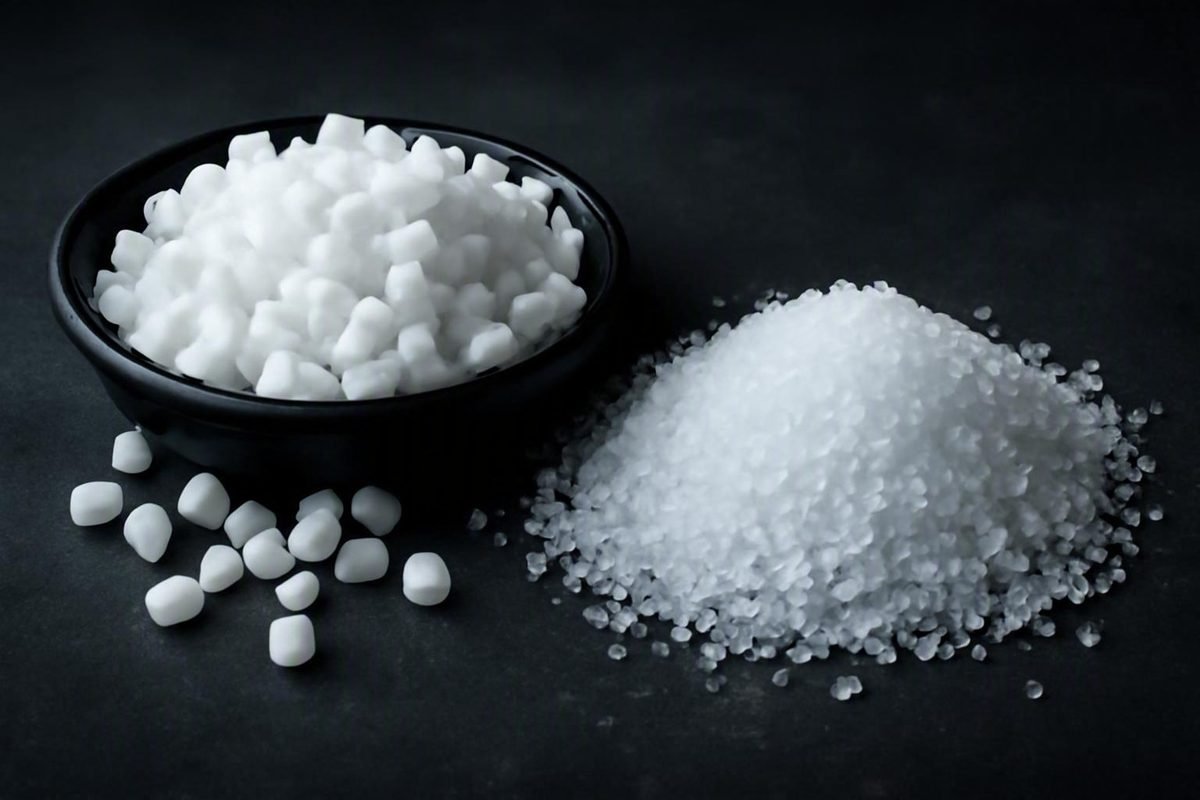
Once I understood what was actually happening, the fix made a lot more sense than it had when I was just vaguely Googling “faucet crust” at eleven at night, getting nowhere useful. The standard, proven solution is a water softener, which handles the problem through a process called ion exchange — essentially swapping out the calcium and magnesium ions for sodium ones as water passes through a resin tank inside the unit.
It sounds almost too simple for how effective it apparently is. I was skeptical going in, half expecting some complicated multi-stage process, but no, that’s basically the whole mechanism. Water goes in hard, comes out soft, and over time the scale buildup that had been slowly colonizing my faucet and appliances just… stops happening. Existing buildup doesn’t disappear instantly, to be clear, but new buildup stops accumulating, and a lot of existing scale does gradually break down and clear out too.
What I Wish I’d Known Two Years Ago
Honestly, the most annoying part of this whole thing wasn’t the scale itself — it was two years of scrubbing a symptom without understanding the actual cause. I’d treated it like a cleaning problem when it was really a water chemistry problem, which meant I was fighting the same battle over and over instead of just fixing it at the source.
If your faucets have that same chalky white residue, or your kettle’s developing a weird crust, or your dishes never quite look spotless even fresh out of the dishwasher, don’t just keep scrubbing like I did. Get your water tested, figure out how hard it actually is, and look into whether a softener makes sense for your situation. It’s not an urgent fix in the way a burst pipe is, so it’s easy to keep putting off. But two years of unnecessary scrubbing later, I can tell you it’s worth just handling it. My faucet looks better than it has in years, and honestly, so does my kettle, which is the real victory here as far as I’m concerned.